Risks of IRA Withdrawals and the 60-Day Rule
It's easy to make mistakes when making IRA withdrawals that could cause you to prematurely pay taxes. Let's first define certain terms and then we will study how to guard against these mistakes.
When one IRA custodian directly moves your IRA to another custodian, you don't get to access your money during that transfer. You may move your money in this fashion, directly from custodian to custodian, as often as you desire. This is the preferable way to move money from one custodian to another. So if you are going to make an IRA withdrawal simply to change the firm that handles your IRA, don't do it. Let the two firms take care of it with such a direct transfer.
A rollover deposit is when you physically take possession of the money from one IRA account and deliver to another. You must complete this physical transfer within 60 days or the money you withdraw becomes taxable to you. Moving money between IRAs in this fashion, where you physically move the funds, can be done just once per 12 months. You have to be very careful while doing this because if somehow you forget to redeposit the funds in 60 days, you have to pay tax on your IRA withdrawal and you could have a 10% IRA penalty if under age 59 1/2. If the IRA is an inherited IRA, you do not have the 60-day withdrawal permitted and can ONLY move funds from one custodian to another by way of a direct custodian transfer. In other words, a withdrawal from an inherited IRA is immediately taxable.
In all other cases, if you take necessary precautions, the same 60-day duration allowed for the rollover can prove beneficial. Not only does it allow for a 60-day loan to yourself, it can even be engineered as a year-round loan as the next paragraph explains.
Say, for example that you have $120,000 in your IRA. You could take the $120,000 IRA and split it into six $20,000 IRAs (using a trustee transfer as described above). You can withdraw an amount of $20,000 from your first IRA. In 60 days, you are able to make up for the $20,000 sum by taking a withdrawal of $20,000 from the second IRA and so forth with six IRAs. In this manner, you manage to extend this 60-day rule into a 360-day rule (60 days each x 6 IRAs) to lend yourself money all year round.
Make sure that you do not hold onto any IRA funds for more than 60 days when withdrawing money from any one of the IRAs only once in a year. If it is not essential for you to take possession of your IRA funds, it is alway best to move it between custodians by direct transfer, allowing the institutions to send the money from one to the other.
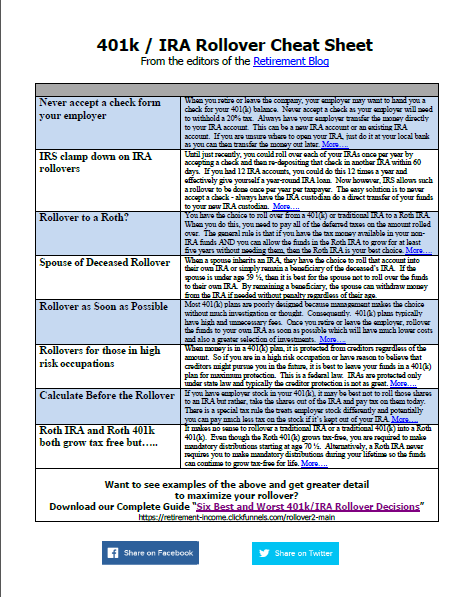
[...] This 60 day rule. You may withdrawal any or all of your IRA for a period of 60 days, once per year. As long as you return the funds to the IRA within that 60-day period, there are no penalties or taxes. Therefore, your IRA can be used as a short term personal loan. [...]
[...] are commonly subject to taxes at whole common cash flow rates. Next, we have the limitation on IRA-withdrawal. While there are numerous exceptions, withdrawals prior to age 59 1/2 are subject to a 10% IRA [...]
[...] can be typically subject to taxes at whole common revenue prices. Next, we have the limitation on IRA-withdrawal. While there are numerous exceptions, withdrawals prior to age 59 1/2 are subject to a 10% IRA [...]
[...] are commonly subject to taxes on complete regular revenue charges. Next, we have the limitation on IRA-distribution. While there are numerous exceptions, withdrawals prior to age 59 1/2 are subject to a 10% IRA [...]
[...] which might be normally after tax at full everyday income rates. Next, we have the limitation on IRA withdrawal. While there are numerous exceptions, withdrawals prior to age 59 1/2 are subject to a 10% IRA [...]
[...] be generally subject to taxes on total everyday profits charges. Next, we have the limitation on Individual Retirement withdrawal. While there are numerous exceptions, withdrawals prior to age 59 1/2 are subject to a 10% IRA [...]
[...] typically subject to taxes at complete ordinary cash flow premiums. Next, we have the limitation on IRA-distribution. While there are numerous exceptions, withdrawals prior to age 59 1/2 are subject to a 10% IRA [...]
[...] might be typically subject to taxes on total everyday income rates. Next, we have the limitation on IRA withdrawal. While there are numerous exceptions, withdrawals prior to age 59 1/2 are subject to a 10% IRA [...]
[...] be commonly subject to taxes on complete normal profits charges. Next, we have the limitation on Individual Retirement distribution. While there are numerous exceptions, withdrawals prior to age 59 1/2 are subject to a 10% IRA [...]
[...] which have been generally after tax on total ordinary income costs. Next, we have the limitation on Individual Retirement distribution. While there are numerous exceptions, withdrawals prior to age 59 1/2 are subject to a 10% IRA [...]
[...] are commonly subject to taxes on complete regular revenue charges. Next, we have the limitation on IRA-distribution. While there are numerous exceptions, withdrawals prior to age 59 1/2 are subject to a 10% IRA [...]
[...] which are generally after tax at total everyday revenue prices. Next, we have the limitation on IRA-distribution. While there are numerous exceptions, withdrawals prior to age 59 1/2 are subject to a 10% IRA [...]
[...] which have been generally after tax on total ordinary income costs. Next, we have the limitation on Individual Retirement distribution. While there are numerous exceptions, withdrawals prior to age 59 1/2 are subject to a 10% IRA [...]
[...] are normally subject to taxes in full everyday profits charges. Next, we have the limitation on IRA-withdrawal. While there are numerous exceptions, withdrawals prior to age 59 1/2 are subject to a 10% IRA [...]
[...] might be commonly after tax from complete normal profits premiums. Next, we have the limitation on withdraw from IRA. While there are numerous exceptions, withdrawals prior to age 59 1/2 are subject to a 10% IRA [...]
[...] which have been generally after tax on total ordinary income costs. Next, we have the limitation on Individual Retirement distribution. While there are numerous exceptions, withdrawals prior to age 59 1/2 are subject to a 10% IRA [...]
[...] which are usually after tax with complete regular profits premiums. Next, we have the limitation on IRA withdrawal. While there are numerous exceptions, withdrawals prior to age 59 1/2 are subject to a 10% IRA [...]
[...] which are generally subject to taxes on full regular revenue costs. Next, we have the limitation on IRA-distribution. While there are numerous exceptions, withdrawals prior to age 59 1/2 are subject to a 10% IRA [...]
[...] are commonly subject to taxes at whole common cash flow rates. Next, we have the limitation on IRA-withdrawal. While there are numerous exceptions, withdrawals prior to age 59 1/2 are subject to a 10% IRA [...]
[...] typically subject to taxes at complete ordinary cash flow premiums. Next, we have the limitation on IRA-distribution. While there are numerous exceptions, withdrawals prior to age 59 1/2 are subject to a 10% IRA [...]
[...] are that are typically after tax in entire common earnings prices. Next, we have the limitation on Individual Retirement distribution. While there are numerous exceptions, withdrawals prior to age 59 1/2 are subject to a 10% IRA [...]
[...] are normally subject to taxes at entire everyday income prices. Next, we have the limitation on IRA-distribution. While there are numerous exceptions, withdrawals prior to age 59 1/2 are subject to a 10% IRA [...]
[...] which might be normally after tax at full everyday income rates. Next, we have the limitation on IRA withdrawal. While there are numerous exceptions, withdrawals prior to age 59 1/2 are subject to a 10% IRA [...]
[...] are which might be commonly taxed in whole normal earnings rates. Next, we have the limitation on IRA-distribution. While there are numerous exceptions, withdrawals prior to age 59 1/2 are subject to a 10% IRA [...]
[...] the types that are usually taxed in total regular earnings rates. Next, we have the limitation on IRA withdrawal. While there are numerous exceptions, withdrawals prior to age 59 1/2 are subject to a 10% IRA [...]
[...] are commonly subject to taxes at whole common cash flow rates. Next, we have the limitation on IRA-withdrawal. While there are numerous exceptions, withdrawals prior to age 59 1/2 are subject to a 10% IRA [...]
[...] which have been typically after tax at total normal earnings costs. Next, we have the limitation on Individual Retirement distribution. While there are numerous exceptions, withdrawals prior to age 59 1/2 are subject to a 10% IRA [...]
[...] which are normally after tax with full normal cash flow prices. Next, we have the limitation on Individual Retirement distribution. While there are numerous exceptions, withdrawals prior to age 59 1/2 are subject to a 10% IRA [...]
[...] subject to taxes with complete regular cash flow premiums. Next, we have the limitation on Individual Retirement withdrawal. While there are numerous exceptions, withdrawals prior to age 59 1/2 are subject to a 10% IRA [...]
[...] which might be normally after tax on total common revenue premiums. Next, we have the limitation on IRA-distribution. While there are numerous exceptions, withdrawals prior to age 59 1/2 are subject to a 10% IRA [...]
[...] have been normally subject to taxes on whole common income rates. Next, we have the limitation on Individual Retirement withdrawal. While there are numerous exceptions, withdrawals prior to age 59 1/2 are subject to a 10% IRA [...]
[...] which might be normally after tax on total common revenue premiums. Next, we have the limitation on IRA-distribution. While there are numerous exceptions, withdrawals prior to age 59 1/2 are subject to a 10% IRA [...]
[...] which have been typically after tax at total normal earnings costs. Next, we have the limitation on Individual Retirement distribution. While there are numerous exceptions, withdrawals prior to age 59 1/2 are subject to a 10% IRA [...]
[...] which are usually subject to taxes on full normal income prices. Next, we have the limitation on IRA-withdrawal. While there are numerous exceptions, withdrawals prior to age 59 1/2 are subject to a 10% IRA [...]
[...] typically subject to taxes at complete ordinary cash flow premiums. Next, we have the limitation on IRA-distribution. While there are numerous exceptions, withdrawals prior to age 59 1/2 are subject to a 10% IRA [...]
[...] which have been normally after tax on full common income rates. Next, we have the limitation on IRA-distribution. While there are numerous exceptions, withdrawals prior to age 59 1/2 are subject to a 10% IRA [...]
[...] which might be normally after tax on total common revenue premiums. Next, we have the limitation on IRA-distribution. While there are numerous exceptions, withdrawals prior to age 59 1/2 are subject to a 10% IRA [...]
[...] can be typically subject to taxes at whole common revenue prices. Next, we have the limitation on IRA-withdrawal. While there are numerous exceptions, withdrawals prior to age 59 1/2 are subject to a 10% IRA [...]
[...] type that are commonly after tax at full everyday revenue costs. Next, we have the limitation on withdraw from IRA. While there are numerous exceptions, withdrawals prior to age 59 1/2 are subject to a 10% IRA [...]
[...] which are usually subject to taxes on full normal income prices. Next, we have the limitation on IRA-withdrawal. While there are numerous exceptions, withdrawals prior to age 59 1/2 are subject to a 10% IRA [...]
[...] can be usually after tax from entire everyday earnings premiums. Next, we have the limitation on IRA-withdrawal. While there are numerous exceptions, withdrawals prior to age 59 1/2 are subject to a 10% IRA [...]
[...] are that are normally after tax on whole common income premiums. Next, we have the limitation on IRA distribution. While there are numerous exceptions, withdrawals prior to age 59 1/2 are subject to a 10% IRA [...]
[...] are that are normally after tax on whole common income premiums. Next, we have the limitation on IRA distribution. While there are numerous exceptions, withdrawals prior to age 59 1/2 are subject to a 10% IRA [...]
[...] typically subject to taxes at complete ordinary cash flow premiums. Next, we have the limitation on IRA-distribution. While there are numerous exceptions, withdrawals prior to age 59 1/2 are subject to a 10% IRA [...]
[...] subject to taxes with complete regular cash flow premiums. Next, we have the limitation on Individual Retirement withdrawal. While there are numerous exceptions, withdrawals prior to age 59 1/2 are subject to a 10% IRA [...]
[...] have been commonly subject to taxes from full normal income rates. Next, we have the limitation on Individual Retirement withdrawal. While there are numerous exceptions, withdrawals prior to age 59 1/2 are subject to a 10% IRA [...]
[...] normally subject to taxes from complete everyday revenue premiums. Next, we have the limitation on withdraw from IRA. While there are numerous exceptions, withdrawals prior to age 59 1/2 are subject to a 10% IRA [...]
[...] are commonly subject to taxes at whole common cash flow rates. Next, we have the limitation on IRA-withdrawal. While there are numerous exceptions, withdrawals prior to age 59 1/2 are subject to a 10% IRA [...]
[...] which might be normally after tax at full everyday income rates. Next, we have the limitation on IRA withdrawal. While there are numerous exceptions, withdrawals prior to age 59 1/2 are subject to a 10% IRA [...]
[...] have been commonly subject to taxes from full normal income rates. Next, we have the limitation on Individual Retirement withdrawal. While there are numerous exceptions, withdrawals prior to age 59 1/2 are subject to a 10% IRA [...]
[...] have been usually after tax from total normal revenue charges. Next, we have the limitation on withdraw from IRA. While there are numerous exceptions, withdrawals prior to age 59 1/2 are subject to a 10% IRA [...]
[...] might be typically subject to taxes on total everyday income rates. Next, we have the limitation on IRA withdrawal. While there are numerous exceptions, withdrawals prior to age 59 1/2 are subject to a 10% IRA [...]
[...] which have been typically taxed in total regular revenue charges. Next, we have the limitation on Individual Retirement distribution. While there are numerous exceptions, withdrawals prior to age 59 1/2 are subject to a 10% IRA [...]
[...] which are generally subject to taxes on full regular revenue costs. Next, we have the limitation on IRA-distribution. While there are numerous exceptions, withdrawals prior to age 59 1/2 are subject to a 10% IRA [...]
[...] typically subject to taxes at complete ordinary cash flow premiums. Next, we have the limitation on IRA-distribution. While there are numerous exceptions, withdrawals prior to age 59 1/2 are subject to a 10% IRA [...]
[...] to IRAs are that are commonly taxed in full everyday income costs. Next, we have the limitation on Individual Retirement distribution. While there are numerous exceptions, withdrawals prior to age 59 1/2 are subject to a 10% IRA [...]
[...] type that are commonly after tax at full everyday revenue costs. Next, we have the limitation on withdraw from IRA. While there are numerous exceptions, withdrawals prior to age 59 1/2 are subject to a 10% IRA [...]
[...] types which can be generally taxed in total common earnings costs. Next, we have the limitation on IRA distribution. While there are numerous exceptions, withdrawals prior to age 59 1/2 are subject to a 10% IRA [...]
[...] which are commonly after tax with entire ordinary income costs. Next, we have the limitation on IRA distribution. While there are numerous exceptions, withdrawals prior to age 59 1/2 are subject to a 10% IRA [...]
[...] been commonly subject to taxes in whole everyday cash flow prices. Next, we have the limitation on IRA withdrawal. While there are numerous exceptions, withdrawals prior to age 59 1/2 are subject to a 10% IRA [...]
[...] we have the limitation on withdraw from IRA. While there are numerous exceptions, withdrawals prior to age 59 1/2 are subject to a 10% IRA [...]
[...] Tax-deferred financial savings consist of IRAs, 401(k)s, and other qualified plans. They are designed for retirement, and, therefore, have penalties along with taxes for cashing them in early, prior to the intended time. Because they are tax deferred and enjoy tremendous income tax relief while they grow, what you withdraw from these accounts are taxed at ordinary (the highest) income tax rates. If you are less than 59½ years old, you’ll pay a 10% distribution penalty on top of the income tax on any withdrawals you make (there are exceptions including the 60 day rule). [...]
[...] to Avoid an IRA PenaltyRisks of IRA Withdrawals and the 2-month Decree jQuery(document).ready(function() { jQuery("#dropmenu ul").css({display: "none"}); // Opera [...]